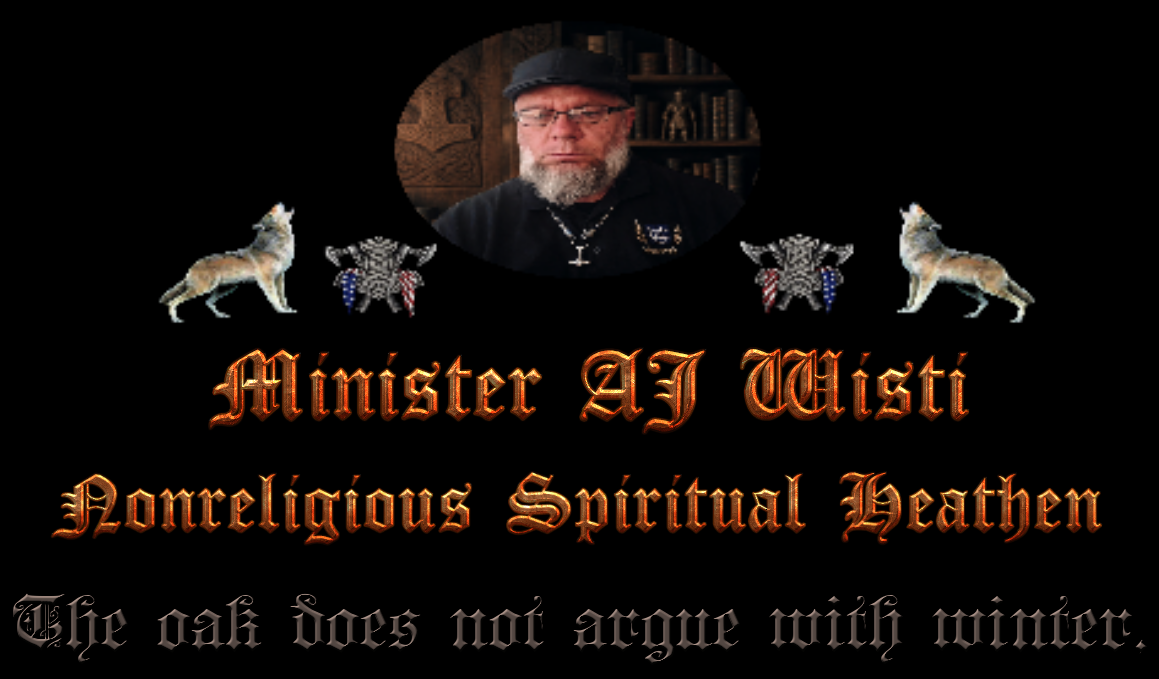
There are moments during solitude, illness, exhaustion, grief, meditation, or disciplined self-reflection where the individual begins searching for language deeper than ordinary conversation. Not always prayer in the traditional religious sense, but invocation nonetheless. A reaching inward. A reaching backward toward ancestral memory. A reaching outward toward whatever force, principle, silence, or mystery governs the unseen corners of existence.
Such moments rarely fit neatly inside denominational structures or carefully rehearsed public rituals. The old paths understood this. So did the mystics, wandering philosophers, hermits, desert ascetics, occult scholars, tribal elders, and solitary practitioners that sought wisdom beyond the walls of institutional approval. Some knelt before gods. Others before silence itself. Some addressed the universe. Others confronted only their own reflection in the darkness and called that confrontation sacred.
This platform recognizes that spiritual language takes many forms. A whispered mantra. A silent meditation. A prayer spoken beneath candlelight. A passage of Stoic reflection repeated during hardship. A song lyric carrying unexpected truth at precisely the right moment. Even modern culture occasionally stumbles into sacred territory without fully realizing it. Wisdom has a strange habit of appearing through unlikely messengers.
Because of this, the invocations and meditative writings shared here are not declarations of exclusive truth, nor demands of allegiance to a particular doctrine. They are tools. Reflections. Doorways into contemplation. Some readers may interpret them psychologically. Others spiritually. Others symbolically. The interpretation belongs to the practitioner, not the observer.
Among certain esoteric traditions, there exists an understanding that symbols, names, archetypes, and spoken words are less important than intention and disciplined awareness. The candle itself possesses no power. The sigil possesses no power. The whispered invocation possesses no power. The transformation occurs within the individual confronting themselves honestly beneath those symbols.
This is why private practice often carries more weight than public performance. The loudest voices are not always the wisest. Ancient traditions repeatedly warned against performative spirituality undertaken for applause, authority, or spectacle. Silence, restraint, observation, and disciplined introspection were often regarded as greater indicators of maturity than dramatic displays of supposed enlightenment.
In my own journey, illness became both adversary and teacher. Physical limitations forced humility. Mental exhaustion forced introspection. Watching my wife endure cognitive decline with dignity and endurance reshaped my understanding of devotion, suffering, and quiet strength. The obstacle became the lesson. The hardship became the forge. This principle exists within Stoicism, within certain Gnostic traditions, within Norse concepts of endurance, and within countless spiritual systems that understand wisdom is often carved through adversity rather than comfort.
Even the ancients understood that suffering strips illusion away. Not to glorify pain unnecessarily, but to recognize that hardship often reveals what comfort successfully conceals. Character. Integrity. Patience. Restraint. Courage. Humility. The hidden architecture of the soul becomes visible when convenience disappears.
So if, during your own wandering, you find yourself drawn toward private reflection, meditative repetition, ancestral contemplation, philosophical prayer, or carefully spoken words meant to steady the mind during chaos, understand that such practices are older than organized institutions and wider than any single doctrine.
Walk carefully. Think critically. Remain grounded. Seek wisdom rather than spectacle. And if you invoke anything at all — whether deity, archetype, memory, silence, or the disciplined higher self — do so with the understanding that intention carries consequence, and that no worthwhile path removes personal responsibility from the traveler walking it.
Invocations
The original Gnostic / Extra-canonical prayer:
Our Light in the heavens,
Holiness be thy name.
Thy kingdom come, thy will be done on earth as in heaven.
Holiness be thy name.
Give us our bread for this day.
Forgive us for our debts as we forgive our debtors.
Lead us not into temptation and deliver us from Sin and Darkness.
For I am not of this realm, and this realm has no claim on what I am.
You could restructure it so the focus shifts from submission and dependence toward discipline, accountability, awareness, and self-mastery, while still retaining the cadence of a prayer or invocation.
Our Light beyond the heavens,
Sacred is the fire of awareness.
Let wisdom walk beside us on this earth, as it moves through the stars beyond it.
Grant us the strength to earn what we need through our own hands and clear minds.
Let us answer for our actions, as others must answer for theirs.
May we recognize temptation without becoming enslaved by it,
and walk through darkness without surrendering to it.
No throne, temple, nation, or doctrine owns the spirit within me.
I belong neither to fear nor blind obedience.
I stand accountable for what I create, what I destroy, and what I become.
Or, if you want something colder and more concise with stronger Stoic and Heathen undertones:
Light beyond the heavens,
witness what is forged within me.
No god, priest, ruler, or crowd can walk my path in my place.
Let me earn my bread through discipline,
meet hardship without complaint,
face temptation without surrender,
and answer fully for my own deeds.
No single doctrine holds all truth.
Wisdom is gathered through trial, observation, sacrifice, and will.
This realm may shape the flesh,
but it holds no claim over the spirit I forge for myself.
A more ritualistic Heathen-esoteric variation:
Flame beyond the veil,
guide not my steps, but my sight.
Let me stand upright without begging for salvation,
and speak truth without fear of exile.
May my hands provide, my word carry weight,
and my mind remain unchained by dogma.
I reject blind submission and hollow displays of virtue.
No scripture contains the whole of what is.
Wisdom is scattered among the ruins of many paths.
I walk them willingly,
accountable for every choice and every consequence.
This world may test me, wound me, and bury me,
but it does not own what rises within me.
Don't Let Scandals Ruin You
I am not a perfectly polished saint carved from marble and propped up beneath stained glass for public admiration. I am a weathered man with scars, failures, regrets, and lessons purchased through consequence. There are those that would gladly drag my wife and I backward into the chaos we fought our way out of, not because they care about righteousness, but because misery desperately seeks company. This article is my declaration of refusal. Not the childish sort fueled by vengeance and tantrums, but the calm and immovable defiance of a man who finally understands that not every accusation deserves a response and not every critic deserves access.
Organized religion often quotes, “Every saint has a past, and every sinner has a future.” Fine words. Comforting words. But in many circles those words became little more than spiritual anesthesia, numbing people to accountability while they repeated the same destructive patterns year after year. Grace without responsibility becomes entitlement. Forgiveness without correction becomes decay. A person cannot continue sowing chaos while demanding applause for admitting they caused it.
The lesson is not that your past disappears. The lesson is that your past does not have the authority to chain you forever unless you willingly kneel before it. Some people build entire identities around victimhood, scandal, addiction, bitterness, or public humiliation. They become caretakers of their own prison cell, polishing the bars while blaming the world for why they refuse to walk free.
If you are trapped in destructive cycles, hear this clearly: no preacher, politician, therapist, influencer, occultist, or self-help guru is coming to magically rescue you from yourself. The responsibility belongs to the one staring back from the mirror. That realization is terrifying to some people because it strips away excuses. Good. Excuses are spiritual cancer. They spread quietly until accountability suffocates beneath them.
I know exactly what it feels like to have people circle overhead like vultures, hoping to feast upon failure, scandal, and personal collapse. Some want you broken because your growth reminds them they remained stagnant. Others resent discipline because it exposes their own laziness. Some simply cannot tolerate watching another person survive what should have destroyed them. That is not your burden to carry. Detachment becomes necessary at that point. Not cruelty. Not hatred. Clarity.
Scripture itself warns about this type of behavior. “As charcoal to hot embers and wood to fire, so is a contentious man to kindle strife.” Proverbs 26:21. Another proverb cuts even deeper: “Above all else, guard your heart, for everything you do flows from it.” Proverbs 4:23. Ancient wisdom understood something modern culture ignores: not every relationship deserves permanent access to your spirit, your labor, or your peace of mind.
LaVeyan philosophy understood another uncomfortable truth many fear acknowledging: indulgence without discipline destroys, but disciplined self-respect strengthens. There is a difference between becoming hardened and becoming focused. One turns a person into a tyrant. The other teaches boundaries. A hammer can build a home or cave in a skull. The tool is not moral or immoral. The responsibility belongs to the hand wielding it.
Fire-and-brimstone preachers once screamed about Hellfire while quietly hiding their own corruption behind pulpits and rehearsed tears. I have no interest in that theater. My message is much simpler. Your actions matter. Your habits matter. Your discipline matters. Your word matters. Your loyalty matters. And if you continually sabotage your own future while blaming everyone around you, eventually even sympathy grows exhausted.
There comes a moment where a person must decide whether suffering will become identity or instruction. That choice separates survivors from perpetual victims. Some people endure hardship and become wise. Others endure hardship and become manipulative, bitter, and addicted to chaos. The difference is accountability.
So if scandal has touched your life, learn the lesson without becoming chained to the shame. Stand back up. Correct what must be corrected. Apologize where apology is owed. Sever ties where corruption persists. Then move forward without begging society for permission to evolve beyond your worst moments.
The world does not need more polished frauds pretending perfection beneath expensive lighting and religious branding. It needs disciplined people willing to confront themselves honestly, endure consequence without collapsing, and emerge from the fire carrying wisdom instead of resentment.
Spiritual & Practical Exploration
- Spirituality
- Religious Deconstruction
- Medicinal & Spiritual Cannabis Advocacy
- Spiritual Exploration
- Historical Points In Missionary Work
- Responsible Advocacy
There comes a point in life where a person grows tired of pretending to be spiritually housebroken for the comfort of polite society. That point arrived for me a long time ago. Not because I rejected spirituality, but because I rejected theater disguised as spirituality. There is a difference. One seeks understanding. The other seeks applause from frightened people desperate for certainty.
As a nonreligious spiritual heathen, I acknowledge that wisdom can emerge from uncomfortable places. Stoicism taught me endurance. Heathen philosophy taught me responsibility. Anton LaVey's writing taught me to examine hypocrisy without flinching. George Carlin taught me that language can either clarify truth or disguise manipulation. None became my master. They became tools. There is a difference between learning from something and kneeling before it.
Organized religion often behaves as though scandal is the unforgivable sin. Meanwhile, entire institutions survive on hidden corruption politely covered with scripture, titles, and carefully rehearsed smiles. The addict hides behind the choir robe. The manipulator quotes sacred text. The greedy man calls his appetite a blessing. The gossip calls herself a prayer warrior. Then everyone stands in a circle pretending no one notices the smell of rot beneath the incense.
I no longer participate in that performance. If there is darkness in my history, I acknowledge it openly. Not for pity. Not for spectacle. For accountability. The person who learns from scandal becomes wiser than the person who buries it beneath spiritual branding and motivational slogans. Failure is not always proof of evil. Often, it is proof that reality finally broke through the illusion.
Critical thinkers understand this instinctively. The lesson is not to become shameless. The lesson is to become honest. There is a profound difference between accountability and self-condemnation. One builds character. The other builds prisons inside the mind. Too many people were taught they are permanently ruined because they made mistakes while trying to survive chaos, addiction, trauma, poverty, or spiritual confusion. That mindset keeps people obedient, frightened, and easy to manipulate.
Here is the uncomfortable truth many institutions fear: a person who survives public misunderstanding without collapsing becomes difficult to control afterward. Once someone learns that reputation can be weaponized, they begin valuing integrity more than popularity. They stop performing. They stop begging for acceptance from crowds that secretly enjoy watching people fall apart.
That does not make one superior. It makes one awake. There is a difference. Humility is not groveling before systems that profit from your shame. Humility is the willingness to say, “Yes, I failed there. Yes, I learned from it. No, I will not remain chained to it forever.” That is not arrogance. That is maturity.
The church often warns people about forbidden books, dangerous philosophies, scandalous musicians, outspoken comedians, and controversial thinkers. Why? Because once a person learns to question one illusion, they may begin questioning all of them. That possibility terrifies systems dependent upon passive obedience. It is much easier to control frightened people than self-aware ones.
I have no desire to become a guru, prophet, cult leader, or spiritual celebrity. Those paths too often become ego worship disguised as enlightenment. My role here is simpler. I explore concepts openly, acknowledge where lessons were learned painfully, and encourage others to think critically without surrendering compassion, reason, or personal responsibility.
So if you carry scandal, regret, controversy, addiction, humiliation, failed relationships, public embarrassment, or mistakes you wish had never happened, understand something clearly. Those moments do not automatically disqualify you from wisdom, growth, leadership, or dignity. Sometimes the most dangerous person to manipulative systems is not the perfect saint. It is the imperfect person who survived collapse, learned the lesson, and refused to surrender their humanity afterward.
That is not rebellion for rebellion's sake. That is spiritual adulthood.
I was raised to examine evidence carefully, stand my ground when confronted by bullies, and learn how to repair what others discarded. Those lessons did not come from polished pulpits or motivational slogans. They came from hard men shaped by difficult years, men that understood life would not hand you mercy simply because you asked politely. Some lessons were taught properly. Others were taught through scars, humiliation, and unnecessary suffering disguised as spiritual guidance.
When I was younger and drowning beneath confusion, poverty, and spiritual uncertainty, I was told by religious authorities to pray harder, repent harder, and question less. The implication was clear: if life was collapsing around me, the failure belonged entirely to me and my supposedly weak faith. That mindset nearly destroyed me. Not because spirituality itself lacked value, but because fear, shame, and dependency had replaced wisdom and accountability within the environments I trusted.
I say this now without bitterness, but also without apology. I do not hate the people that taught me those things. Some were simply repeating what they themselves inherited without ever questioning it. But I refuse to romanticize the damage caused by theology used as a substitute for practical help, emotional maturity, personal responsibility, and honest conversation. There is a difference between guidance and control. I learned that distinction the hard way.
My path eventually led me away from blind obedience and toward examination, discipline, and spiritual independence. Not arrogance. Not rebellion for its own sake. Clarity. I began understanding that truth is not weakened by scrutiny. Only fragile systems fear questions. Real wisdom survives inspection, pressure, and disagreement.
Much of that understanding came flooding back through memories of my grandfather's workshop. I still remember the smell of sawdust and Wisconsin birch bark resting in the corners of the room. I remember old tools worn smooth by decades of use. I remember the sound of his antique hand-cranked drill turning slowly through stubborn wood while he worked patiently instead of carelessly forcing the job. Nothing in that workshop was rushed. Nothing was thrown away simply because it showed wear.
That workshop taught me more about ministry, endurance, and humanity than many sermons ever did. Broken things were repaired there. Sanded down. Reinforced. Reworked. Sometimes an old board carried cracks and scars, but if the foundation remained sound, it still had purpose. That lesson stayed with me. It shaped how I approach writing, spirituality, relationships, and community outreach. People are much the same way. A scarred life is not automatically a worthless one.
Modern culture has developed an addiction to disposal. Broken appliance? Replace it. Broken friendship? Discard it. Broken marriage? Escape it. Broken person? Shame them publicly and move on to the next distraction. But older generations understood something we are rapidly forgetting: repair builds character. Restoration requires patience. Strong foundations matter more than polished appearances.
This is why I reject ideological movements demanding blind loyalty, racial supremacy, religious nationalism, or political worship. Those systems feed on fear, outrage, and shallow identity while ignoring the actual condition of the human soul beneath the slogans. I have seen enough manipulation disguised as righteousness to recognize the pattern when it appears.
So for those who walked away from organized religion carrying wounds, anger, distrust, or exhaustion, understand this clearly: you are not automatically ruined because you questioned what harmed you. Some of the wisest people alive arrived at wisdom only after surviving disillusionment. There is no shame in rebuilding your understanding carefully instead of surrendering your mind to institutions demanding silence and obedience.
I stand beside you not as a savior, prophet, or flawless spiritual authority, but as another traveler carrying lessons purchased through hardship. The work now is not to become bitter. The work is to become useful. Steady hands. Clear eyes. Honest labor. Strong boundaries. Compassion without weakness. Accountability without cruelty.
Stay the course wherever your journey leads. Repair what can be repaired. Learn from what could not be saved. Carry the lesson forward. That is how strong people are built, and how communities worth preserving survive hard times.